
 Image 1 of 1
THIS IS A DIGITAL COPY ONLY - YOU WILL NOT RECEIVE A PHYSICAL COPY IF YOU PURCHASE THIS VERSION!
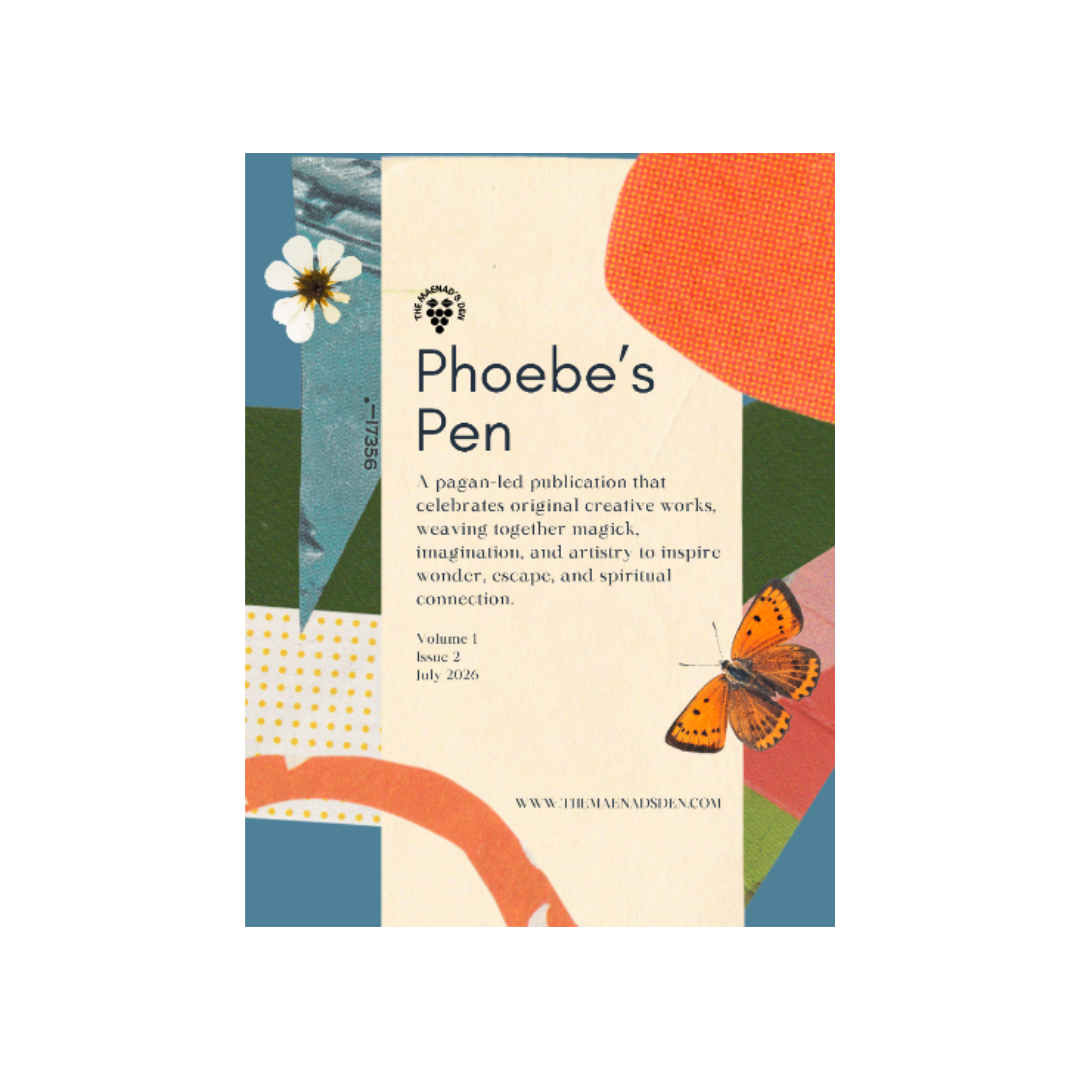
Phoebe’s Pen is a semi-annual publication created by The Maenad’s Den, a Pagan and Occult nonprofit organization founded in northeast Ohio.
What happens when history begins to repeat itself?
In an increasingly polarized world, fear, scapegoating, political rhetoric, and attacks on marginalized communities can feel disturbingly familiar. Phoebe’s Pen, Volume 1, Issue 2 explores the connections between the witch trials of the past and the social and political struggles of the present.
Through an examination of witch trials, the history of scapegoating, and the evolving language of terms like witch hunt, this publication explores how societies have historically responded to fear and uncertainty by searching for someone to blame, and how those burdens have so often fallen upon women, LGBTQ+ people, minorities, and other marginalized communities.
However, witchcraft has never been solely about persecution.
For many practitioners, magic is also a way to reclaim agency in a world that can make us feel powerless. Healing, protection, ritual, and spellwork can become tools for navigating difficult circumstances, finding strength, and creating change.
In this issue, we ask readers to look critically at the patterns repeating around us.
THIS IS A DIGITAL COPY ONLY - YOU WILL NOT RECEIVE A PHYSICAL COPY IF YOU PURCHASE THIS VERSION!
Phoebe’s Pen is a semi-annual publication created by The Maenad’s Den, a Pagan and Occult nonprofit organization founded in northeast Ohio.
What happens when history begins to repeat itself?
In an increasingly polarized world, fear, scapegoating, political rhetoric, and attacks on marginalized communities can feel disturbingly familiar. Phoebe’s Pen, Volume 1, Issue 2 explores the connections between the witch trials of the past and the social and political struggles of the present.
Through an examination of witch trials, the history of scapegoating, and the evolving language of terms like witch hunt, this publication explores how societies have historically responded to fear and uncertainty by searching for someone to blame, and how those burdens have so often fallen upon women, LGBTQ+ people, minorities, and other marginalized communities.
However, witchcraft has never been solely about persecution.
For many practitioners, magic is also a way to reclaim agency in a world that can make us feel powerless. Healing, protection, ritual, and spellwork can become tools for navigating difficult circumstances, finding strength, and creating change.
In this issue, we ask readers to look critically at the patterns repeating around us.